
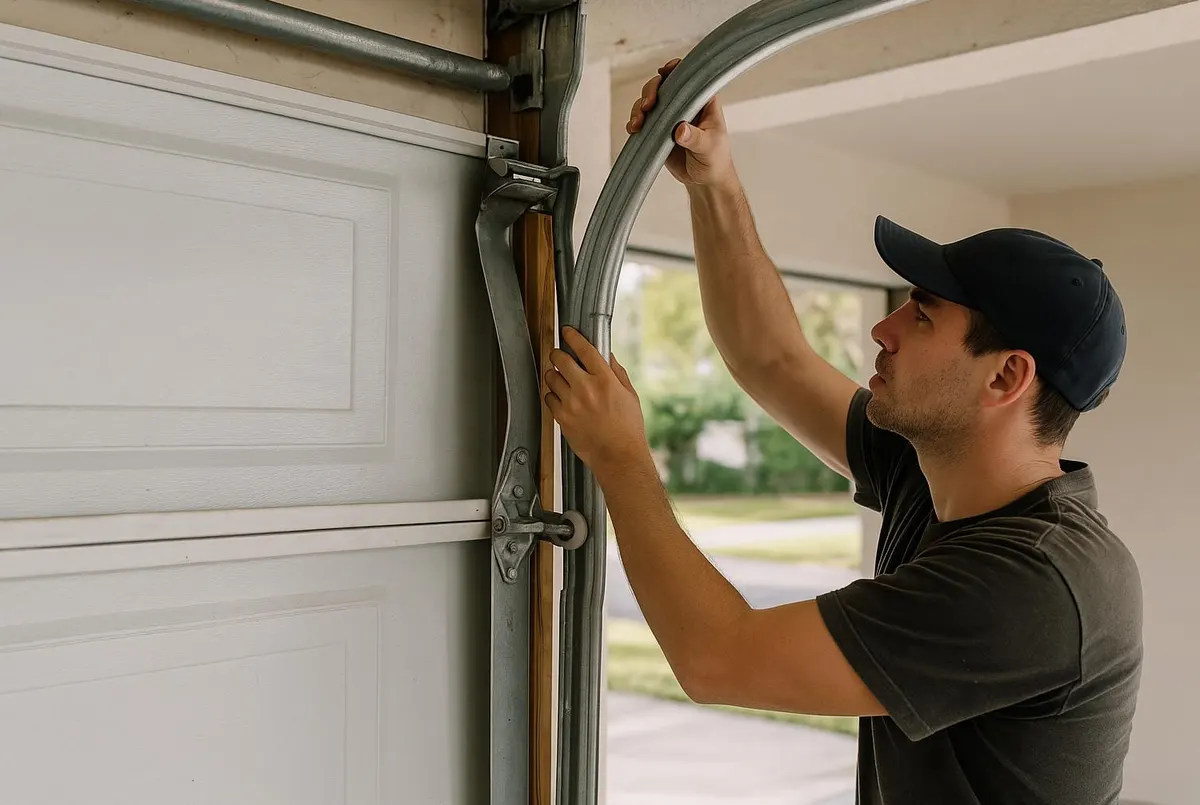
What a Technician Sees on This Call
The call usually goes like this: a tenant reports the garage door won't open, or it's grinding and sagging on one side. A technician shows up and finds a broken spring, a rusted track, or an opener that's been dying slowly for months. Then comes the real question, asked by the tenant on the phone to the landlord while the tech is standing there: "Wait, do I have to pay for this?" Nobody checked the door at move-in, nobody wrote anything down, and now two adults are arguing about a part neither of them has looked at in a year.
The General Rule of Thumb
Garage doors fall under the same logic as plumbing, HVAC, and electrical systems in most rental agreements: the landlord is responsible for keeping core mechanical components in safe working order, and the tenant is responsible for damage caused by misuse or negligence. That means:
- Landlord's side: worn-out springs, failing cables, aging rollers, track that's bent from years of humidity swelling the wood jamb around it, an opener that's simply reached end of life.
- Tenant's side: backing a car into the door, forcing a door that's stuck instead of reporting it, letting kids slam the remote button repeatedly, or damage from storing something that blocked the sensors and caused a collision.
Where it gets messy is the gray area in between — and in this climate, that gray area is bigger than most people think.
Why the Gray Area Is Wider Here
Salt air and humidity accelerate corrosion on springs, hinges, and track hardware faster than in drier climates. A spring that would last years inland can rust and fail sooner near the coast. If a landlord hasn't scheduled any tune-up or maintenance in years, that's ordinary wear accelerated by neglect of maintenance — still the landlord's responsibility. But if a tenant never reported a grinding noise or a door that was visibly off-track for weeks, and the delay caused more damage, a landlord can reasonably argue the tenant let a small problem become a big one. Afternoon downpours and hurricane-season wind also matter: if a door was damaged in a storm because weatherstripping was already failing and water got into the opener, that's usually a maintenance issue, not a tenant issue.
What to Inspect at Move-In
This is the part that prevents the argument six months from now. Before move-in (or right after), walk the garage with your phone and document:
- Open and close the door manually (disconnect the opener first) and feel for resistance, grinding, or uneven movement.
- Check both springs for visible rust, gaps in the coils, or stretching.
- Look at the tracks for dents, rust, or gaps where they meet the wall brackets.
- Test the opener's auto-reverse safety feature by placing a block of wood in the door's path.
- Check remotes and keypad for working batteries and correct codes.
- Photograph weatherstripping at the bottom seal — cracked or missing seal lets in water and pests during storm season.
- Note any existing dents, scratches, or panel warping, especially near the bottom where humidity causes wood-composite doors to swell.
Put this in writing, dated, with photos attached to the lease or sent in an email to the landlord. That single step settles almost every dispute before it starts.
When to Call Precision Garage Door of Tarpon Springs
If you're a landlord trying to get ahead of problems before a new tenant moves in, or a tenant trying to get a documented, neutral assessment of what's actually wrong, that's exactly what a service call is for. Our techs can perform a Garage Door Tune-Up & Maintenance visit to check springs, cables, rollers, and opener safety features, and give you a written rundown of what's wear-and-tear versus what needs attention. If the door is already stuck, off track, or making noise that's gotten worse, our Off Track Door Repair service gets it moving safely again the same visit in most cases. Having a dated, professional inspection report is also the cleanest way to settle who pays for what.
If you're dealing with a garage door dispute, a loud door, or you just want peace of mind before move-in day, call Precision Garage Door of Tarpon Springs. We serve Tarpon Springs, FL and the surrounding area, and we'll give you a straight answer about what's going on and what it'll take to fix it.