
The One-Sentence Rule
Most noisy garage doors just need fresh lubricant and tighter hardware, and you can knock that out in twenty minutes with tools already in your garage. The exceptions are grinding bearings, a screeching metal chain, or a loud bang when the door moves — those point to worn parts or a broken spring, and they call for a technician, not a squirt of oil.
Why Garage Doors in This Area Get Loud Faster
Humidity swells wood and composite door panels, which makes them rub against the tracks and squeal. Salt air drifting in off the coast speeds up rust on hinges, rollers, and springs, so metal-on-metal grinding shows up sooner than it would further inland. And a door that sat through a summer of afternoon downpours often has grit and moisture baked into the track, turning normal operation into a rattle-and-shudder show. None of that means your door is failing — it just means lubrication and hardware checks need to happen more often here than in a drier climate.
Tools You'll Need
- Socket wrench set (typically 7/16" and 1/2")
- Silicone- or lithium-based garage door lubricant (not WD-40 — it attracts dust and dries out fast)
- A rag and a stepladder
- Flashlight
- Work gloves
Step-by-Step: What You Can Do Yourself
1. Figure Out What's Actually Making the Noise
Run the door up and down once with the garage light on and just listen. A squeal usually means dry rollers or hinges. A rattle means loose hardware. A screech from the motor unit itself often means the chain needs lubrication or tensioning. Metal grinding or a loud pop is different — skip ahead to the technician section.
2. Tighten Every Visible Bolt
Garage doors open and close thousands of times a year, and the vibration loosens hinge bolts, track brackets, and roller brackets over time. Go panel by panel with your socket wrench and snug everything up. This alone fixes a surprising number of rattles.
3. Lubricate the Moving Parts
Spray lubricant on the hinges, rollers, and the torsion spring (a light coat, not a soaking). Wipe the tracks clean first, then lubricate where the rollers contact the track. Do this every three to four months here, especially right before hurricane season when humidity and salt exposure are both climbing.
4. Check the Rollers
Nylon rollers with worn or cracked wheels cause a rhythmic thunking noise as the door moves. If a roller looks chipped, flat-spotted, or wobbly on its stem, it's due for replacement. Nylon rollers are a straightforward swap and run a lot quieter than old steel rollers.
5. Add Anti-Vibration Pads
If the opener motor itself is loud, isolation pads between the motor bracket and the ceiling joist cut down on the vibration that transmits through your garage ceiling into the house. This is a cheap fix and especially worth it if the garage sits under a bedroom.
6. Check Chain Tension (Chain-Drive Openers Only)
A chain that's too loose slaps against the rail with every cycle. Most openers have a tensioning bolt near the motor head — consult your opener's manual before adjusting, since over-tightening strains the motor.
Where the Line Is: Homeowner vs. Technician
Everything above is safe weekend work with basic tools. Here's what isn't:
- Grinding or metal-on-metal noise from the spring area — torsion springs are under extreme tension and are not a DIY repair.
- A loud bang followed by the door refusing to move — that's almost always a broken spring or snapped cable.
- Persistent screeching after lubrication and tightening — the chain or belt itself may be worn out and need replacement.
- An opener that's noisy no matter what you do — older chain-drive units simply get louder with age, and no amount of lubricant fixes worn internal gears.
If you're in any of those situations, stop troubleshooting and call a technician. Garage door springs alone injure thousands of DIYers a year nationally, and it's not worth the risk to save a service call.
When a Belt-Drive Swap Makes Sense
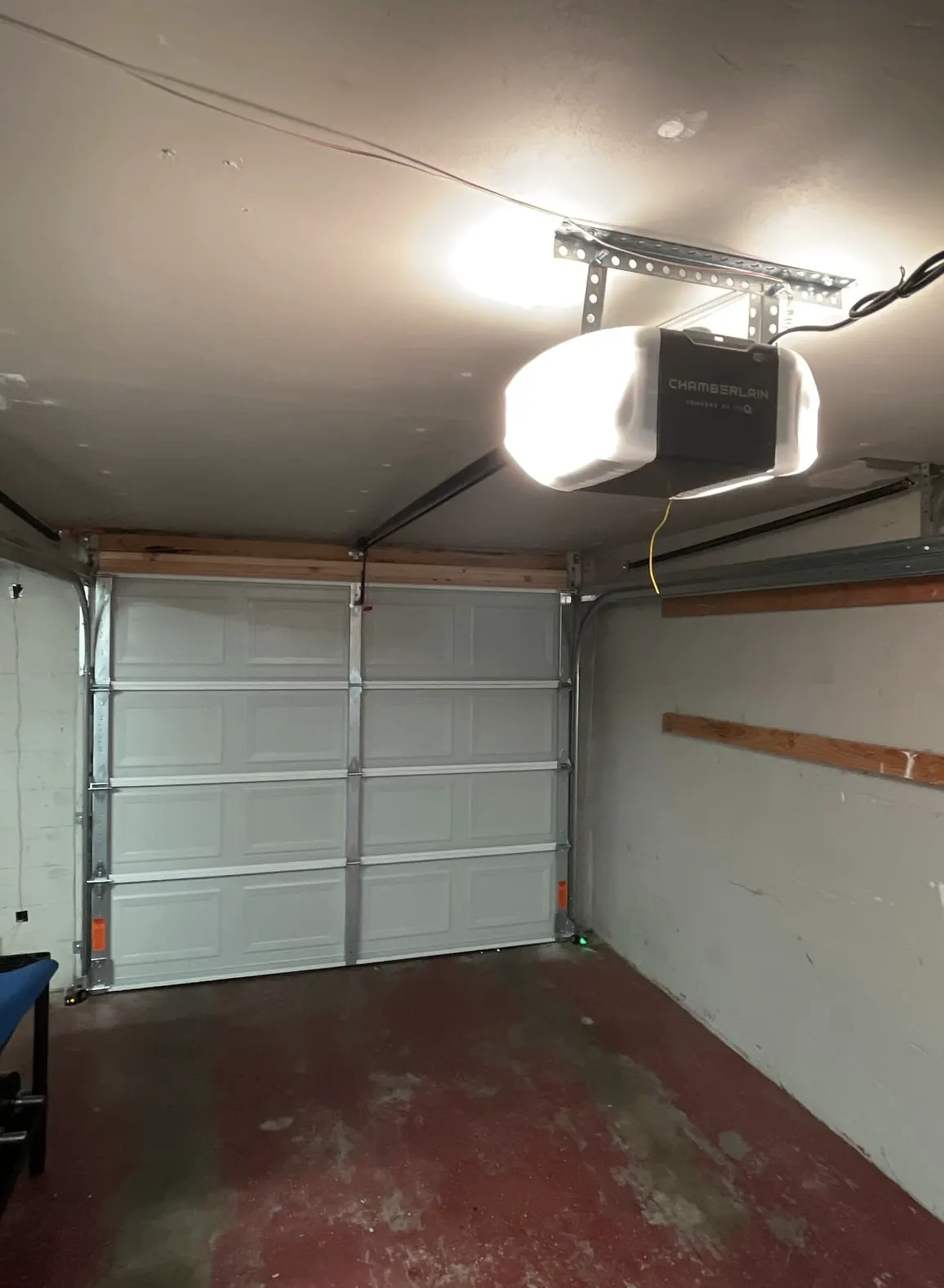
If your chain-drive opener is more than eight or ten years old and still loud after fresh lubrication and a tensioning adjustment, the chain and motor bearings are likely worn past the point of a quick fix. At that stage, swapping to a belt-drive opener is usually the better move rather than continuing to patch an aging chain system. Belt drives run on a reinforced rubber belt instead of metal chain, which cuts out most of the mechanical noise, and they hold up well in this region's humidity since there's no metal chain to rust or stretch.
When to Call Precision Garage Door of Tarpon Springs
If you've gone through the steps above and the door still grinds, bangs, or the opener strains and groans with every cycle, it's time to bring in a technician. Precision Garage Door of Tarpon Springs handles Garage Door Tune-Up & Maintenance visits that cover full lubrication, hardware tightening, roller inspection, and track alignment — the kind of thorough check that catches rust and wear before it becomes a breakdown during storm season. If your noise turns out to be a worn-out chain-drive motor, we also handle Garage Door Opener Installation, including belt-drive upgrades built for quieter, more humidity-resistant operation.
If your garage door in Tarpon Springs, Palm Harbor, Dunedin, Holiday, New Port Richey, Clearwater, Oldsmar, or Trinity is making noise that won't quit, call Precision Garage Door of Tarpon Springs and we'll get a technician out to diagnose it fast and fix it right the first time.